
The cybersecurity market has been undergoing a transition with automation and niche solutions coming in the market.
However, this change took a dramatic turn when the two AI giants OpenAI, and Anthropic, showed that their models have the potential to turn the cybersecurity economics upside down.
And now suddenly, many scanning tools saw a threat to their entire business models. While the other tools sped up their scrambling efforts to now become AI embedded, by any means possible.
You have probably seen and heard of the AI and then the agentic wave that has come in cybersecurity.
The market pressures of AI are such that we see AI-native security startups being launched and acquisitions of AI startups by the incumbents every month. And that’s where the investment and spending growth has been over the last year.
Estimates suggest that while the overall cybersecurity spend is set to grow at 11% compounded annual growth rate from 2026 to 2029, the AI cybersecurity spending is expected to grow three to four times as fast.
And that’s expected. AI has shown material gains in some cases for both defensive and offensive aspects of cyber protection and greater efficiency in overall cyber operations.
But then as you look at the market hype, you also see that a part of this AI talk is just not the true picture. Or to put it more simply, a lot of it is just aggressive marketing.
And that’s what we’re going to talk about in this blog.
I’ve tried to keep the content relevant for at least 4-5 years from now, but it still depends on how the market turns out.
Here, we’ll discuss the basics and good practices of marketing AI in cybersecurity, the right way.
These good practices are compiled from some of the already known marketing tenets and also how buyers have come to evaluate the AI claims in the cybersecurity industry.
So, let’s dive in.
AI Security Products: Offensive, Defensive, and How Real the Hype Actually Is
A lot of cybersecurity is now being sold as AI-driven, whether or not the AI is doing much of the actual work.
Big players have been on an acquisition spree, buying up small, sharp AI security startups every few quarters instead of building the capability themselves.
New AI security products are also getting funded practically every month.
So, what I’m trying to answer here is: when an AI startup starts marketing their product, what are the best ways to show their claims are substantiated and not bogus?
One of the largest early-stage round in cybersecurity history: Armadin, founded by former Mandiant CEO Kevin Mandia, raised $189.9 million on the argument that you cannot have a human in the loop for every defense decision and expect to win..
Anthropic’s own Claude Mythos has found vulnerabilities that sat unnoticed for years, including a 27-year-old flaw in OpenBSD, and in 2025 outside actors reportedly manipulated Anthropic’s own Claude Code to help run cyberattacks against Anthropic itself and other major targets, with AI carrying out most of the operational work.
Attackers are moving at a similar pace: 94% of security professionals now call AI the single biggest driver of change in their work.
That’s also exactly why Anthropic’s own vulnerability-detection tool met real skepticism at launch: the market is asking for a lot of proof, in order to make a significant move.
That skepticism is precisely what the rest of this piece is built around – the need for AI in security is genuine, but that doesn’t make every AI security claim real.
You have the money flowing in to AI Cybersecurity, but the marketing can’t sustain the burden of proof.
So, let’s see what the real test is – for the marketing to be real in this case.
The Real Test: How Do You Actually Prove an AI Claim?
I did what any good analysis should look like. I have analyzed some of the well-known brands in cybersecurity across 4-5 domains and evaluated their marketing on multiple factors.
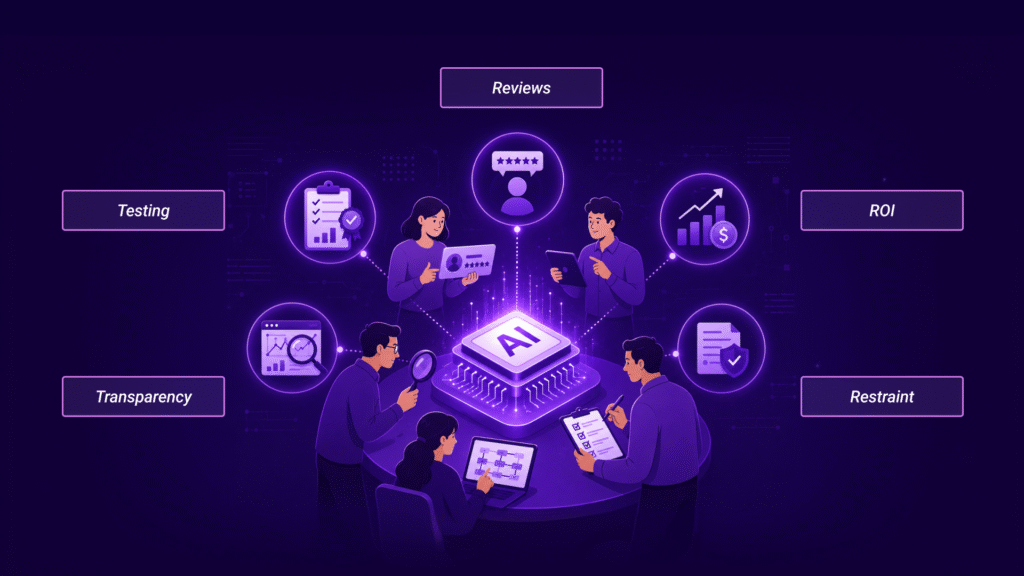
The key here is to know whether the marketed claims or statements (be it on LinkedIn or on the website) are backed either by verified tests, or have they proven RoI in a certain setting, or do they have valid and specific testimonials that validate their claims, and how well does the company explain what their AI does.
Just for example, the autonomous offensive security product company XBOW mentions that their AI agent is the best AI hacker in the world.
Now, that claim is proven because it actually beat thousands of human researchers to the #1 spot on HackerOne’s public leaderboard, a neutral scoreboard which brings a lot of trust. That’s the validation that makes your marketing stronger.
While on the other hand, Horizon3.ai also calls its AI (NodeZero), “World’s Best AI Hacker”. But that claim remains hidden on the website, and most importantly, it remains unsubstantiated.
When you’re marketing an AI Security startup and putting labels like “AI-native,” “agentic,” or “human-in-the-loop”, that only says something vague about the product.
It describes an architecture on paper – but shows nothing on whether your product works and how does it add the value you claim it does. Any vendor can attach this to their product with minimal AI capabilities and be a part of the hype.
But your marketing will only bring you better RoI, when you substantiate it well.
This is a list of factors that strengthens your marketing.
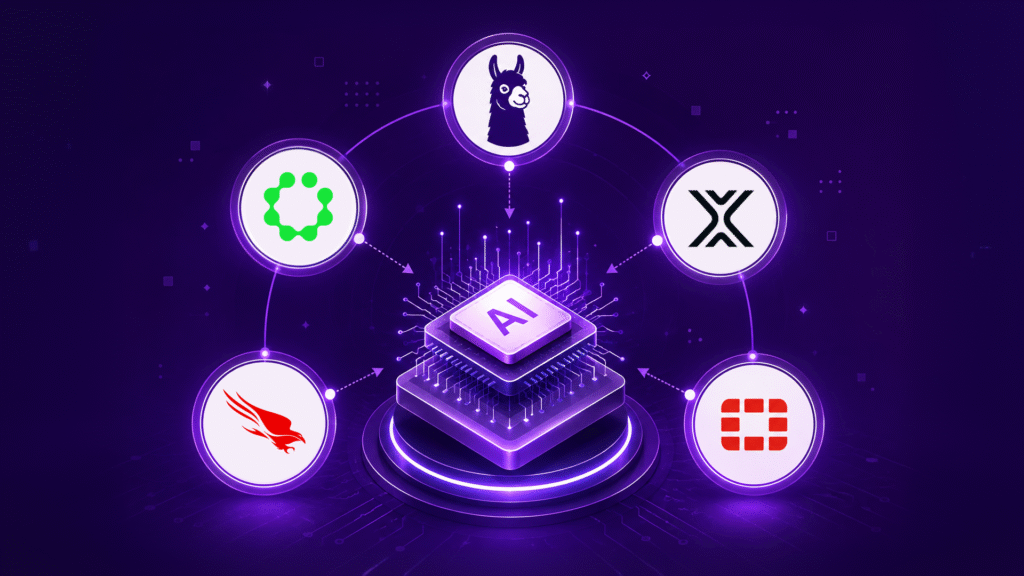
Proof of AI in Cybersecurity: Five Companies That Do This Well
We researched broadly across the AI security landscape, offensive, defensive, identity, data, and compliance, and scored each candidate against the five proof types above. These five cleared the bar most clearly, with each leaning on a different combination:
The Security Angle of the AI Products
Buyers have caught up to the AI security proof as well.
The static vendor questionnaire is being replaced by live proof of concept, because a questionnaire answer is a claim about a product that changes weekly.
The new questions are specific: where does our data actually go, what identity does the AI act under when it touches our systems, what happens when it’s wrong, and is this genuinely autonomous or a rule-based tool wearing an AI label (buyers now call the fake version “agent washing”)?
The buying motion has restructured around this: a written RFP, a live demo in the buyer’s own environment, and only then a paid proof of concept measured against metrics agreed before the trial starts.
The gap this scrutiny is closing is real.
For instance, in one 2024 survey covering the GRC space, 72% of enterprise buyers said AI capability influenced their purchase decision, but 58% said the product failed to deliver on its AI promises within the first year.
As one CISO in that research put it, a system that confidently gets it wrong one time in five creates more liability than no system at all.
The Bottom Line
The companies which have embedded AI in their security or compliance offerings don’t just win because their AI or the technology is superior.
The most important aspect is the consistency of their marketing claims, their social proof, and their technical resources for the product.
Their whole narrative is comprehensive, and it’s not just led by marketing claims to ultimately be proven insufficient by the customers.
Those who don’t combine any of these factors with their marketing, face the risk of their brand authority getting jeopardized on platforms which get real (even if anonymous) reviews from users.
These factors are the pillars of any strong marketing because each can point to something real: an independent test, a real measure of RoI or efficiency, a customer’s own words, a clear explanation, or an honest limitation of the product.
Once you include any of these, it makes an actual difference to your product’s messaging.
Your messaging genuinely reflects real AI capabilities or business use cases, instead of just marketing hype.
If you’re looking to market your AI security product rigorously, your foundation lies in fixing any of the 5 factors mentioned above. Your messaging needs to derive from these foundational elements.